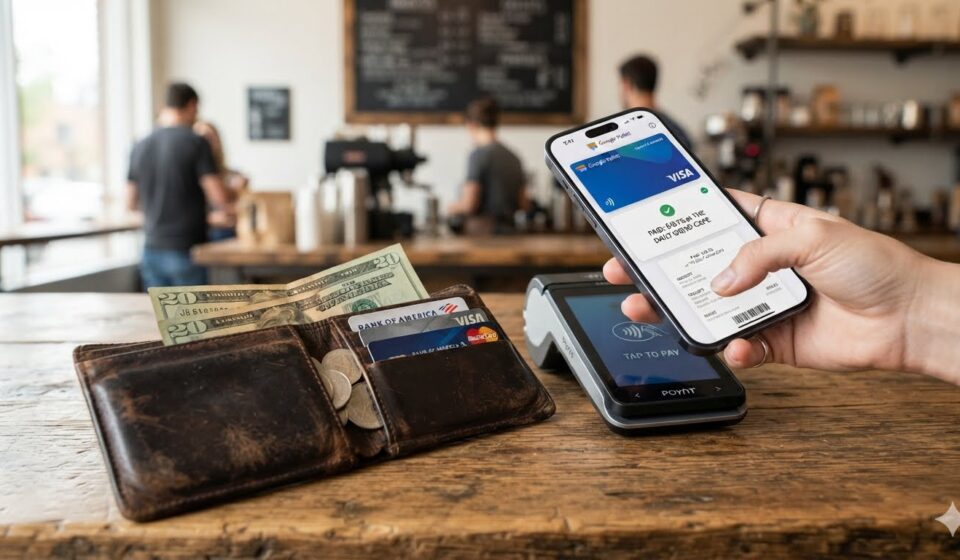

The Death of the Physical Wallet
Look inside your pocket or bag right now. The traditional leather wallet—bulky, stuffed with faded paper receipts, plastic loyalty cards, and crisp paper bills—is becoming an artifact of the past. Over the last decade, a quiet revolution has taken place inside our smartphones. The mobile wallet has evolved from a niche technological novelty into a mainstream financial necessity. Today, carrying a physical wallet is no longer a requirement for navigating modern society; it is an choice.
The transition from physical currency to digital tokens represents one of the most significant shifts in human commerce since the invention of paper money. Mobile wallets have fundamentally altered how we interact with businesses, manage our personal finances, and conceptualize the very idea of value. This article explores the rapid rise of mobile wallets, the underlying technology that keeps them secure, and the profound impact they are having on global economies.
From SMS Banking to Smartphone Super-Apps
To understand where mobile wallets are going, it is essential to look at where they began. The earliest iterations of mobile payments did not rely on sleek touchscreen smartphones. In the late 1990s and early 2000s, primitive mobile banking emerged via SMS text messaging. Users could check account balances or transfer small sums of money using basic code commands.
The true turning point occurred in 2007 with the launch of M-Pesa in Kenya. Developed by Vodafone and Safaricom, M-Pesa allowed users to deposit, withdraw, and transfer money easily using simple mobile phones. It did not require a traditional bank account, making it a lifeline for millions of unbanked citizens. M-Pesa proved that mobile devices could serve as decentralized financial hubs.
In the developed world, the mobile wallet narrative shifted with the introduction of Near Field Communication (NFC) technology and the launch of major tech-backed platforms. Google Wallet arrived in 2011, followed by Apple Pay in 2014 and Samsung Pay in 2015. These platforms integrated credit and debit cards directly into the operating system of the smartphone. Suddenly, making a payment was as simple as tapping a phone against a checkout terminal. Today, these applications have expanded far beyond payments, transforming into “super-apps” that hold digital driver’s licenses, event tickets, boarding passes, and keys to smart cars.
The Anatomy of a Mobile Wallet: How It Works
To the average consumer, a mobile wallet feels like magic. You hold your phone near a cash register, biometric authentication approves the transaction, a pleasant chime sounds, and the payment is complete. Behind that seamless two-second interaction lies a complex web of advanced software architecture and cryptographic security.
There are three primary technologies powering modern mobile wallets:
- Near Field Communication (NFC): This is a short-range wireless connectivity technology that allows devices to communicate over distances of a few centimeters. When you hold your phone near a contactless payment terminal, the NFC chips exchange encrypted data to process the payment.
- Quick Response (QR) Codes: Popularized extensively in Asian markets by platforms like Alipay and WeChat Pay, QR code payments require a user to either scan a merchant’s barcode or present their own barcode to be scanned. This method requires no specialized hardware on the smartphone, making it incredibly cost-effective for small merchants.
- Magnetic Secure Transmission (MST): Utilized primarily by older Samsung devices, MST emits a magnetic signal that mimics the magnetic stripe on a traditional credit card. This allowed phones to work even on legacy payment terminals that lacked NFC capabilities.
A common misconception is that mobile wallets store your actual credit card number on your device. In reality, they utilize a security process called Tokenization. When you add a card to your digital wallet, the financial institution replaces your sensitive 16-digit card number with a randomly generated, unique identifier called a token. When you make a purchase, only this token is transmitted to the merchant. Even if a cybercriminal intercepts the transmission, the data is completely useless to them. Combined with mandatory biometric security (Face ID, Touch ID, or fingerprint scans), mobile wallets are statistically far more secure than physical plastic cards.
Financial Inclusion on a Global Scale
While convenience drives mobile wallet adoption in Western nations, financial inclusion is the driving force across developing regions. For generations, traditional banking systems failed marginalized communities. Setting up a brick-and-mortar bank branch requires massive capital investment, and maintaining a traditional checking account often demands minimum balances and high fees that low-income individuals cannot afford.
Mobile wallets have successfully bypassed this rigid infrastructure. Because mobile network coverage expands much faster than physical bank branches, anyone with a budget smartphone can instantly access the global financial ecosystem. In regions across Sub-Saharan Africa, Latin America, and Southeast Asia, digital wallets allow street vendors, agricultural workers, and gig economy contractors to receive payments securely, build a verified transaction history, and gain access to micro-loans and insurance products that were previously out of reach.
The Challenges Ahead
Despite the overwhelming benefits, the road to a completely cashless society via mobile wallets is not without roadblocks. Systemic challenges remain that tech developers and policymakers must address:
- The Digital Divide: While smartphone penetration is at an all-time high, elderly populations and individuals living in extreme poverty or remote rural areas with poor cellular connectivity risk being left behind in a cashless world.
- Fragmentation: The mobile wallet market is highly fragmented. A consumer might use Apple Pay, while a local coffee shop only accepts PayPal QR codes, and a friend prefers Venmo. Achieving universal interoperability remains a hurdle.
- Regulatory Scrutiny: Governments worldwide are closely monitoring the massive wealth and data controlled by tech companies operating these wallets. Issues surrounding data privacy, antitrust violations, and cross-border regulatory compliance are constantly evolving.
Looking to the Future
The evolution of the mobile wallet is far from complete. As we look ahead, these digital ecosystems will continue to absorb more aspects of our daily identities. We are already seeing the integration of Central Bank Digital Currencies (CBDCs) and decentralized cryptocurrencies directly into mainstream mobile wallets.
The physical wallet served humanity well for centuries, but its time has drawn to a close. The future belongs to a consolidated, secure, and intelligent digital hub that fits neatly within the palm of your hand.