
The Invisible Bridge of E-Commerce
Imagine walking into a physical retail store. You pick up an item, walk to the checkout counter, swipe your plastic card through a terminal, and walk out. The entire physical interaction is tangible and familiar.
Now, transition to the digital world. You visit an online store, click a “Buy Now” button, enter your 16-digit card number into a web form, and click submit. Within less than three seconds, the webpage updates with a confirmation screen, an automated receipt hits your email inbox, and the fulfillment warehouse begins boxing your order.
During those quiet, invisible three seconds, your financial information travels through a complex global security network, checking account balances across continents and verifying identity parameters. The technology making this seamless digital checkout possible is the payment gateway.
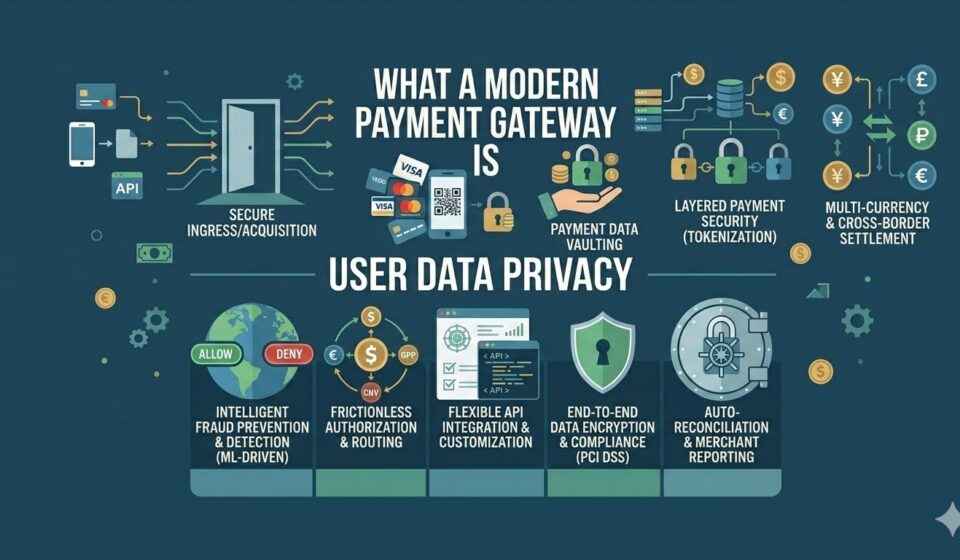
A payment gateway is the software infrastructure that bridges the gap between an e-commerce website and the financial networks that process money. It acts as a digital cashier, securely capturing, encrypting, and transmitting payment data from the consumer to the merchant’s financial institution. This article explores the inner workings of payment gateways, the hidden financial mechanics behind online transactions, and how to select the right platform for a growing business.
The Mechanics of a Three-Second Transaction
To understand the importance of a payment gateway, it helps to map out the journey a transaction takes. When a customer submits their payment details on an e-commerce platform, the payment gateway initiates a tightly coordinated, multi-step relay race involving four key participants:
- The Merchant: The online store or digital service provider selling the product.
- The Customer: The cardholder initiating the purchase.
- The Issuing Bank: The customer’s financial institution or credit card provider.
- The Acquiring Bank: The merchant’s bank account built to accept corporate card settlements.
Here is the step-by-step breakdown of how these entities interact during a standard checkout window:
- Step 1: Encryption and Capture: The customer inputs their credit card data into the website checkout page. The payment gateway instantly encrypts this data using Secure Sockets Layer (SSL) or Transport Layer Security (TLS) protocols, ensuring that no malicious third parties can read the data while it is in transit.
- Step 2: Transmission to the Processor: The payment gateway routes the encrypted data to the merchant’s payment processor, which acts as the intermediary connecting the website to the credit card networks (like Visa, Mastercard, or American Express).
- Step 3: The Authorization Request: The card network forwards the transaction request to the customer’s Issuing Bank. The issuing bank runs rapid automated checks: Is the card valid? Does the account have sufficient funds? Does the transaction look like fraudulent activity based on the user’s historical spending habits?
- Step 4: The Decision Loop: The issuing bank generates a specific response code (either “Approved” or “Declined”) and sends this message back down the chain through the card network, to the processor, and finally back to the payment gateway.
- Step 5: Fulfillment: The payment gateway displays the final result to the consumer. If approved, the merchant updates their digital ledger and prepares the order for shipment.
The Shield of E-Commerce: Security and Compliance
Because payment gateways handle highly sensitive financial data, they are the primary targets for global cybercriminals. If a hacker intercepts unencrypted credit card data, the financial liability for the merchant can be catastrophic, resulting in steep regulatory fines, lost merchant privileges, and a destroyed brand reputation.
To mitigate these security threats, the global payment gateway industry is governed by a strict, mandatory set of security rules called the Payment Card Industry Data Security Standard (PCI-DSS). Any payment gateway operating today must achieve the highest tier of compliance, known as PCI-DSS Level 1.
Modern payment gateways utilize two advanced security technologies to keep data safe:
- Tokenization: Just like modern mobile wallets, advanced payment gateways never store raw credit card data on a merchant’s server. Instead, they swap out sensitive card information for a randomly generated string of alphanumeric characters known as a token. The merchant’s database only holds this token, making the server completely useless to hackers if a database breach occurs.
- 3D Secure (3DS): This is an added layer of security that requires consumers to complete an extra verification step with their bank before a purchase is finalized. This usually involves entering a one-time SMS verification code or approving a push notification inside their mobile banking app. The latest iteration (3DS2) uses machine learning to assess risk passively, keeping the checkout frictionless for trusted buyers while triggering security challenges only for high-risk transactions.
Gateway Models: Hosted vs. Integrated
When a business owner integrates a payment gateway into their website, they must choose between two primary architectural models:
Hosted Payment Gateways
With a hosted gateway, when a customer clicks the checkout button, they are redirected away from the merchant’s website to a secure, external payment page hosted entirely by the gateway provider (such as PayPal Standard). Once the payment is complete, the customer is automatically redirected back to the merchant’s main site.
- The Benefit: Incredibly easy to set up and requires minimal technical coding knowledge. Because the gateway provider handles the data entirely on their own servers, the merchant’s personal PCI-DSS compliance burden is minimized.
- The Downside: Redirecting a customer to an external, unfamiliar website at the most critical moment of the purchase cycle can feel jarring, occasionally harming conversion rates.
Integrated (Non-Hosted) Gateways
An integrated gateway allows the entire checkout process to happen seamlessly within the merchant’s existing website architecture via an API or software development kit (SDK). The customer never leaves the site.
- The Benefit: Offers a completely customizable, cohesive, and premium brand experience. It keeps conversion rates high because the checkout feels secure and consistent.
- The Downside: Requires web development expertise to implement and maintain. The merchant must take on a higher level of technical responsibility to ensure their website remains strictly compliant with modern data security standards.
How to Choose Your Payment Gateway Partner
Selecting a payment gateway provider is a critical strategic business decision. The wrong gateway can lead to high transaction abandonments, restrictive payment limits, and hidden costs that eat into your profit margins.
When evaluating potential payment gateway providers, use this structural evaluation matrix to guide your decision-making process:
- Fee Transparency: Look closely at how the platform structures its pricing. Most gateways charge a percentage fee plus a fixed transaction fee (e.g., 2.9% + $0.30 per transaction). Beware of hidden monthly account maintenance fees, setup costs, or premium fees for international card handling.
- Alternative Payment Methods (APMs): Modern consumers expect to pay using more than just standard credit cards. Ensure your gateway natively supports digital wallets (Apple Pay, Google Wallet), regional payment methods (SEPA, iDEAL), and Buy Now, Pay Later (BNPL) options like Klarna.
- Geographic and Currency Support: If you plan to scale your business globally, your gateway must be capable of accepting multiple local fiat currencies and settling those funds into your domestic business account without charging extortionate foreign exchange conversion markups.
The Foundation of Digital Growth
A payment gateway is far more than just a functional software utility; it is the vital foundation upon which successful digital enterprises are constructed. By selecting a gateway that offers ironclad security, a frictionless checkout experience, and a transparent pricing model, you eliminate the friction that stands between your target audience and your products, setting the stage for uninhibited global growth.